
IT auditors earn an average of $107,999 annually, with entry-level positions starting at $75,491 and senior roles reaching $144,863, yet many professionals still don’t understand what these tech detectives actually do. According to the U.S. Bureau of Labor Statistics, employment of auditors is projected to grow 4% from 2022 to 2032, with technology and cybersecurity auditing driving much of this demand as organizations face increasing regulatory requirements and cyber threats.
Whether you’re considering a career change into IT auditing or trying to understand what these professionals bring to your organization, this guide breaks down everything you need to know about IT auditor roles, responsibilities, salary expectations, and career paths. You’ll discover the different types of IT auditors, learn what they actually do day-to-day, and get a clear roadmap for entering this growing field.
Ready to dive deeper? Our IT auditor series covers essential skills, job requirements, and IT vs IS differences for career success.
What is an IT Auditor? (The Simple Definition)
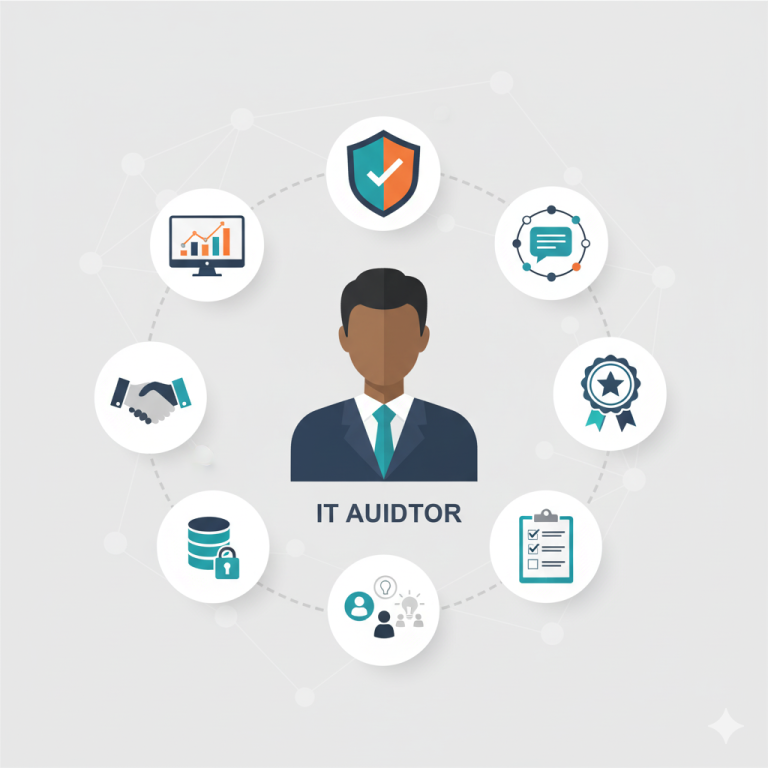
An IT auditor is a professional who reviews and evaluates an organization’s information technology systems, controls, and processes to ensure they operate securely, efficiently, and in compliance with regulatory requirements. Think of them as technology detectives who examine digital infrastructure to identify vulnerabilities, verify proper controls are in place, and recommend improvements to protect against cyber threats and operational failures.
Unlike traditional financial auditors who focus primarily on monetary transactions, IT auditors concentrate on the technological backbone that supports business operations. They assess everything from network security and data management to software development processes and disaster recovery procedures. Their work ensures that an organization’s technology systems can be trusted to produce accurate financial reporting and maintain operational integrity.
IT auditors serve as a critical bridge between technical IT teams and business management. They translate complex technical risks into business language that executives can understand and act upon. When they identify issues—whether it’s weak password policies, inadequate backup procedures, or missing security controls—they provide practical recommendations for remediation and work with organizations to implement improvements.
The role has become increasingly vital as businesses rely more heavily on technology for core operations. With cyber attacks costing companies an average of $4.45 million per breach according to IBM’s 2023 Cost of a Data Breach Report, IT auditors play an essential role in preventing costly security incidents and ensuring business continuity.
Types of IT Auditors (Internal vs External vs Specialized)
The IT auditing profession offers several distinct career paths, each with different responsibilities, work environments, and advancement opportunities. Understanding these variations helps you choose the right focus for your career goals and work preferences.
Internal IT Auditors work directly for the organization they audit. They’re employees who focus on strengthening their company’s internal control environment and helping management identify and address technology risks. Internal auditors typically have deeper knowledge of their organization’s systems and business processes, allowing them to provide more targeted recommendations. They report findings to their company’s management and audit committee, working collaboratively to implement improvements. This role often offers better work-life balance with less travel and more predictable schedules.
External IT Auditors work for consulting firms, accounting firms (especially the Big 4), or specialized audit companies. They audit multiple client organizations, usually focusing on public companies with regulatory reporting requirements. External auditors bring fresh perspectives and industry best practices from working with diverse clients. They report their findings to the clients who hired their firm, providing independent validation of controls for investors and regulators. This path typically involves more travel, varied projects, and potentially higher compensation, especially at major firms.
SOX IT Auditors specialize in Sarbanes-Oxley compliance auditing, focusing specifically on internal controls over financial reporting. These professionals work with public companies to ensure their technology systems adequately support accurate financial reporting. SOX auditing represents the largest segment of IT audit work due to mandatory annual requirements for public companies. This specialization offers excellent job security and clear career progression paths.
Information Security Auditors concentrate specifically on cybersecurity and data protection. They evaluate security controls, conduct vulnerability assessments, and ensure compliance with security frameworks like ISO 27001 or NIST. With cybersecurity threats constantly evolving, this specialization is experiencing rapid growth and commands premium compensation.
IT Risk Auditors focus on broader technology risk management, evaluating how IT risks might impact business objectives. They assess everything from technology strategy alignment to vendor management and business continuity planning. This role often serves as a stepping stone to senior risk management positions.
Each type offers unique advantages. Internal roles provide stability and deep organizational knowledge. External positions offer variety and broader industry exposure. Specialized roles allow you to develop expertise in high-demand areas like cybersecurity or regulatory compliance.
What Does an IT Auditor Do? (Daily Responsibilities Explained)
IT auditors spend their days examining technology systems and processes to ensure they operate effectively and securely. Their work combines detective-like investigation with strategic business thinking, requiring both technical knowledge and strong communication skills.
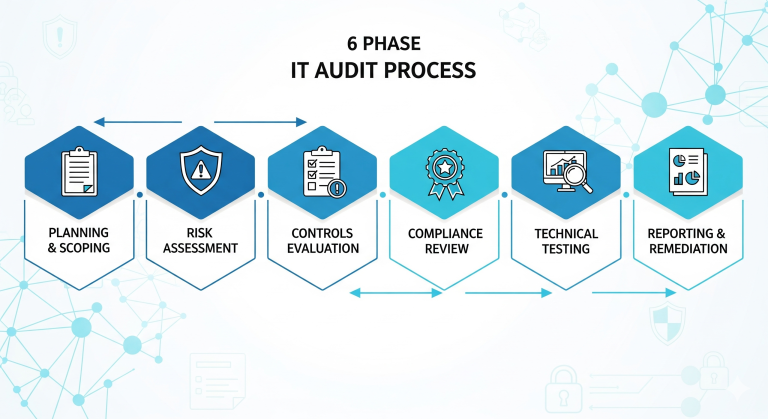
Documentation Review forms a significant portion of daily work. IT auditors examine policies, procedures, system documentation, and control descriptions to understand how technology processes should work. They review network diagrams, user access lists, change management procedures, and disaster recovery plans. This documentation analysis helps them identify potential gaps or inconsistencies before moving to hands-on testing.
Testing and Validation involves verifying that documented controls actually work as intended. For example, an auditor might test whether new user accounts are properly approved before creation, or whether system backups actually restore correctly. They use specialized audit tools to analyze data, review system logs, and trace transactions through technology systems. A typical test might involve selecting a sample of new employees and verifying that their system access was appropriately authorized and granted.
Risk Assessment requires auditors to identify vulnerabilities and evaluate their potential impact on business operations. They consider factors like likelihood of occurrence, potential financial impact, and existing mitigation controls. This analysis helps organizations prioritize their technology investments and risk management efforts.
Stakeholder Interviews involve meeting with IT staff, management, and process owners to understand how systems work in practice. Auditors might interview system administrators about their backup procedures, application owners about their development processes, or end users about their experiences with security controls. These conversations often reveal informal processes or workarounds that don’t appear in official documentation.
Report Writing transforms audit findings into actionable business recommendations. Auditors must clearly explain technical issues to non-technical audiences, quantify risks in business terms, and provide practical remediation suggestions. A well-written audit report explains not just what’s wrong, but why it matters and how to fix it.
Follow-up Activities involve tracking management’s progress on implementing audit recommendations. Auditors work with process owners to ensure identified issues are properly addressed and that new controls operate effectively.
Consider this real-world example: An IT auditor testing user access controls might discover that terminated employees retain system access for weeks after departure. They would document this finding, assess the risk of unauthorized access to sensitive data, interview HR and IT staff about termination procedures, and recommend automated account deactivation processes. They would then follow up quarterly to verify the new controls are working properly.
The work requires strong analytical thinking, attention to detail, and the ability to see both technical details and broader business implications. Successful IT auditors enjoy problem-solving, working with people across different departments, and continuously learning about new technologies and business processes.
IT Auditor Skills and Qualifications (What You Really Need)
Success as an IT auditor requires a unique combination of technical knowledge, business acumen, and interpersonal skills. Understanding which skills are essential versus nice-to-have helps you focus your professional development efforts effectively.
Technical Skills form the foundation of IT audit work. You need a solid understanding of network infrastructure, operating systems, databases, and common business applications. This doesn’t mean you need to be a systems administrator, but you should understand how these technologies work and interact. Knowledge of security concepts like access controls, encryption, and vulnerability management is increasingly important. Familiarity with audit tools like ACL, IDEA, or specialized GRC platforms helps you perform testing more efficiently.
Analytical Skills enable you to examine complex data, identify patterns and anomalies, and draw meaningful conclusions. IT auditors regularly analyze large datasets, review system logs, and evaluate control effectiveness. Strong analytical thinking helps you connect seemingly unrelated findings to identify broader risk themes. You’ll also need problem-solving abilities to investigate unusual transactions or system behaviors.
Communication Skills are absolutely critical, as you’ll spend significant time explaining technical concepts to business stakeholders. You must translate complex IT risks into language that executives and board members can understand and act upon. This includes both written communication for audit reports and verbal skills for presentations and stakeholder interviews. The ability to ask probing questions and listen actively during interviews often uncovers critical information that formal testing might miss.
Business Acumen helps you understand how technology risks impact business objectives. Effective IT auditors think beyond technical compliance to consider broader business implications. Understanding financial statements, business processes, and industry dynamics enables you to provide more valuable recommendations. Knowledge of regulatory frameworks like Sarbanes-Oxley, GDPR, or industry-specific regulations is increasingly important.
Regulatory Knowledge becomes essential as you advance in your career. Familiarity with frameworks like COBIT for IT governance, COSO for internal controls, and NIST for cybersecurity provides structure for your audit approach. Understanding how these frameworks apply to different industries and business models helps you tailor your audit procedures appropriately.
Project Management Skills become important as you take on larger audit engagements or lead audit teams. You’ll need to plan audit procedures, manage timelines, coordinate with multiple stakeholders, and ensure deliverables meet quality standards. Many senior IT auditors eventually manage teams of junior auditors, requiring leadership and mentoring abilities.
Essential vs Nice-to-Have Skills: Focus first on developing strong analytical and communication abilities, basic technical knowledge, and understanding of at least one major regulatory framework. Programming skills, advanced security certifications, and industry-specific expertise can differentiate you but aren’t required for entry-level positions.
Skill Development Timeline: Most professionals need 6-12 months to develop basic audit methodology skills, 1-2 years to become proficient in a specific technical area or regulatory framework, and 3-5 years to develop the business judgment and stakeholder management skills needed for senior roles.
The field rewards continuous learning, as technology and regulations constantly evolve. Successful IT auditors stay current through professional development, industry conferences, and networking with peers in similar roles.
IT Auditor Education and Certifications (Your Learning Path)
The path to becoming an IT auditor offers multiple entry points, allowing professionals from various backgrounds to transition into this growing field. Understanding the education and certification landscape helps you plan the most efficient route to your career goals.
Degree Requirements vary by employer, but most organizations prefer candidates with bachelor’s degrees in information technology, computer science, accounting, finance, or related fields. The specific major matters less than demonstrating analytical thinking and technical aptitude. Many successful IT auditors have degrees in business administration, management information systems, or even liberal arts fields, provided they can demonstrate relevant technical knowledge and skills.
Entry-Level Alternatives exist for motivated professionals without traditional IT backgrounds. Some organizations hire candidates with strong analytical skills and provide on-the-job technical training. Military veterans with technology or intelligence backgrounds often transition successfully into IT audit roles. Professionals with accounting or finance experience can leverage their business knowledge while developing technical skills through certification programs or bootcamps.
Essential Certifications significantly enhance your credibility and earning potential. The most valuable certifications include:
CISA (Certified Information Systems Auditor) represents the gold standard for IT audit professionals. Offered by ISACA, this certification requires five years of relevant experience (with various substitutions allowed) and passing a comprehensive exam. The CISA certification demonstrates expertise in auditing, controlling, monitoring, and assessing information technology and business systems. Most employers prefer or require this certification for senior IT audit positions.
CISSP (Certified Information Systems Security Professional) focuses on information security management and architecture. This certification requires five years of security experience and demonstrates advanced knowledge of security concepts. While not specifically audit-focused, CISSP adds valuable credibility for IT auditors working in security-related areas.
CIA (Certified Internal Auditor) provides a strong foundation in general auditing principles and risk management. This certification complements technical IT knowledge and demonstrates broader business understanding. Many IT auditors pursue CIA certification to enhance their business credibility and prepare for management roles.
Career-Stage Certification Planning should align with your experience level and career goals. New graduates or career changers should focus on gaining practical experience while studying for foundational certifications like CISA. Mid-career professionals might pursue specialized certifications in areas like cybersecurity (CISSP) or risk management (CRISC). Senior professionals often add management-focused credentials or industry-specific certifications.
Cost and Time Investment varies significantly by certification. CISA certification typically requires 6-12 months of study time and costs $2,000-$4,000 including exam fees, study materials, and training courses. CISSP preparation requires similar time and financial investment. Many employers support certification efforts through tuition reimbursement or study time allowances.
Employer Preferences increasingly favor candidates with relevant certifications, especially for positions requiring client interaction or regulatory expertise. Big 4 accounting firms typically require or strongly prefer CISA certification for senior positions. Internal audit departments may accept candidates pursuing certification while working, provided they commit to completing requirements within specified timeframes.
Alternative Pathways include intensive bootcamp programs, online certification courses, and vendor-specific training. Cloud platforms like AWS, Azure, and Google Cloud offer specialized audit and security certifications that demonstrate current technology knowledge. These alternatives can supplement traditional education and provide practical skills for specific audit areas.
Professional organizations like ISACA, IIA (Institute of Internal Auditors), and ISCA (Information Systems Audit and Control Association) offer networking opportunities, continuing education, and career development resources that complement formal certification programs.
IT Auditor Salary and Career Progression (2025 Reality Check)
IT auditing offers strong compensation potential with clear advancement opportunities, making it an attractive career choice for professionals seeking financial stability and growth. Understanding current salary ranges and progression paths helps you set realistic expectations and negotiate effectively.
Entry-Level Salaries for IT auditors typically range from $75,491 to $93,155 annually, according to recent industry surveys. Geographic location significantly impacts starting salaries, with major metropolitan areas like San Francisco, New York, and Washington DC offering premiums of 15-25% above national averages. Entry-level positions at Big 4 accounting firms often start at $80,000-$95,000, while smaller firms and internal audit departments may offer $70,000-$85,000. Remote positions have become more common post-COVID, though they may offer slightly lower compensation than on-site roles.
Mid-Career Earnings for professionals with 3-7 years of experience range from $94,051 to $107,999 annually. At this level, specialization begins to impact compensation significantly. Professionals focusing on cybersecurity, SOX compliance, or emerging technologies like cloud computing command premium salaries. Senior auditor positions at major consulting firms can reach $110,000-$130,000, while equivalent internal roles might range from $95,000-$115,000.
Senior-Level Compensation for IT audit managers and directors ranges from $128,000 to $144,863, with total compensation packages often exceeding $170,000 when including bonuses and benefits. Partners at consulting firms or Chief Audit Executives at large corporations can earn $200,000-$400,000 or more. At this level, compensation reflects leadership responsibilities, business development contributions, and specialized expertise.
Industry Variations create significant salary differences. Financial services typically offers the highest compensation, with major banks and investment firms paying premiums for regulatory expertise. Technology companies often provide competitive base salaries plus substantial equity compensation. Healthcare and government sectors may offer lower base salaries but provide excellent benefits and job security.
Geographic Impact remains substantial despite increased remote work options. California leads with average IT auditor salaries of $115,000-$125,000, followed by New York ($105,000-$115,000) and Washington DC ($100,000-$110,000). Lower cost-of-living areas like the Midwest and Southeast typically offer salaries 10-20% below coastal markets, though the cost-adjusted purchasing power may be comparable.
Bonus and Benefits significantly enhance total compensation. Annual bonuses of 10-25% are common, with performance-based incentives potentially reaching 30-40% for top performers. Benefits packages typically include health insurance, retirement contributions, professional development allowances, and certification reimbursement. Many firms offer flexible work arrangements, additional vacation time, and sabbatical opportunities for senior professionals.
Career Progression Timeline follows predictable patterns in most organizations. Entry-level auditors typically advance to senior auditor roles within 2-3 years, assuming satisfactory performance and relevant certifications. Management positions (audit manager, senior manager) become available after 5-7 years, with director-level roles requiring 8-12 years of experience. Partnership tracks at consulting firms typically require 12-15 years and demonstrated business development capabilities.
Exit Opportunities from IT auditing include Chief Information Security Officer (CISO) roles, IT Risk Management positions, consulting partnerships, and senior compliance roles. Many IT auditors transition to client-side positions offering 20-30% salary increases. Others launch independent consulting practices or join specialized cybersecurity firms. The transferable skills developed in IT auditing create numerous advancement possibilities across multiple industries.
Salary negotiation becomes more important as you advance in your career. Professionals with specialized certifications, industry expertise, or leadership experience can command premium compensation. Understanding market rates, demonstrating value contributions, and maintaining professional networks all contribute to compensation growth over time.
How to Become an IT Auditor (Step-by-Step Career Plan)
Transitioning into IT auditing requires strategic planning, whether you’re a recent graduate, career changer, or IT professional seeking new opportunities. This step-by-step approach provides a realistic roadmap for entering and succeeding in the field.
Step 1: Assess Current Skills and Identify Gaps begins with honest evaluation of your technical knowledge, business experience, and transferable skills. Use online assessments or professional consultations to identify specific areas for development. Consider your background strengths—accounting professionals bring financial knowledge, IT professionals have technical skills, and business analysts understand process optimization. Create a development plan focusing on your highest-impact skill gaps rather than trying to master everything simultaneously.
Step 2: Choose Your Education Path based on your current background and career timeline. If you lack a relevant degree, consider completing a bachelor’s program in information technology, computer science, or business. However, professionals with unrelated degrees can often enter the field by demonstrating technical competency through certifications and practical experience. Online programs, bootcamps, and professional development courses offer flexible alternatives to traditional degree programs.
Step 3: Gain Relevant Experience through internships, entry-level IT roles, or volunteer opportunities. Many professionals begin in IT support, business analysis, or accounting roles that provide relevant foundation skills. Internal audit departments often hire business professionals and provide IT-specific training. Consider contract or temporary positions that expose you to different organizations and audit methodologies. Document your experiences and focus on developing both technical and business communication skills.
Step 4: Pursue Foundational Certifications starting with the most relevant to your target career path. CISA certification requires work experience but allows substitutions for education and other credentials. Begin studying for CISA while gaining practical experience, as the knowledge directly applies to daily work. Consider pursuing CIA certification if you have strong business background but limited IT experience. Vendor-specific certifications like Microsoft, AWS, or Cisco can demonstrate current technical knowledge.
Step 5: Build Professional Network and Seek Mentorship through industry organizations, local chapter meetings, and professional events. Join ISACA, IIA, or other relevant associations in your area. Attend conferences, webinars, and networking events to meet practicing professionals. Seek informational interviews with current IT auditors to understand different career paths and industry trends. Consider finding a mentor who can provide guidance, review your resume, and potentially refer you to opportunities.
Step 6: Apply Strategically to Entry-Level Positions targeting organizations that match your background and interests. Tailor your resume to highlight relevant skills and experiences, even if they’re not directly IT audit related. Apply to Big 4 firms, regional accounting firms, internal audit departments, and specialized consulting companies. Consider starting in adjacent roles like IT risk analysis or compliance if direct audit positions aren’t available. Focus on organizations with strong training programs and clear advancement opportunities.
Timeline Expectations vary based on your starting point and career goals. Career changers with relevant experience might transition within 6-12 months, while those requiring significant skill development may need 2-3 years. Expect 6-18 months for certification preparation, depending on your study schedule and experience level. Plan for multiple application cycles, as the most desirable positions often have competitive selection processes.
Common Pitfalls include underestimating the business communication requirements, focusing too heavily on technical skills without developing audit methodology knowledge, and targeting positions beyond your current experience level. Avoid pursuing too many certifications simultaneously—focus on one at a time for better results. Don’t neglect networking and relationship building, as many opportunities come through professional connections.
Success Metrics help you measure progress and adjust your approach. Track your application response rates, interview conversion rates, and feedback themes. Monitor your certification study progress and practical skill development. Seek feedback from mentors, peers, and interviewers to identify improvement areas. Celebrate milestones like completing certification exams, gaining relevant work experience, and expanding your professional network.
The transition requires patience, persistence, and strategic thinking. Focus on building a strong foundation rather than rushing into the first available opportunity. The investment in proper preparation typically results in better initial positions and faster long-term career progression.
IT Auditor vs Other IT Careers (Making the Right Choice)
Choosing between IT auditing and other technology careers requires understanding the unique characteristics, requirements, and rewards of each path. This comparison helps you assess fit based on your interests, skills, and long-term goals.
IT Auditor vs. IT Security Analyst represents a common decision point for cybersecurity-interested professionals. IT auditors evaluate security controls and processes from a compliance and risk perspective, while security analysts focus on implementing and monitoring defensive technologies. Auditors typically work on multiple projects across different organizations, providing broad exposure to various security approaches. Security analysts usually specialize in specific technologies and work for single organizations. Both roles offer strong compensation and growth potential, but auditors often have clearer paths to management roles, while security analysts may advance to specialized technical positions like security architect or penetration tester.
IT Auditor vs. Traditional Financial Auditor appeals to accounting professionals considering specialization. Financial auditors focus primarily on monetary transactions and accounting controls, while IT auditors concentrate on the technology systems supporting financial reporting. IT auditors generally command higher compensation due to specialized technical knowledge requirements. The work offers more variety in terms of technology exposure and systems tested. However, financial auditing may provide clearer regulatory frameworks and more established career progression paths. Many professionals combine both skillsets to become specialized SOX auditors.
IT Auditor vs. IT Consultant involves different client relationship models and work structures. Consultants typically implement solutions and provide strategic advice, while auditors evaluate existing controls and recommend improvements. Consultants may travel more frequently and work on longer-term engagements, while auditors often complete projects in weeks or months. Both roles offer exposure to multiple organizations and industries. Consulting may provide higher immediate compensation but less job security, while auditing offers more predictable career progression and work-life balance.
IT Auditor vs. Compliance Officer represents different approaches to risk management. Compliance officers typically work for single organizations, focusing on ensuring adherence to specific regulations or industry standards. IT auditors may work internally or externally, evaluating controls across multiple areas. Compliance roles often require deep knowledge of specific regulations, while IT auditing requires broader technical and business knowledge. Both careers offer strong growth potential, but IT auditing may provide more transferable skills across industries.
Personality Fit Assessment helps determine suitability for IT auditing careers. Successful IT auditors typically enjoy analyzing complex problems, working with people across different departments, and explaining technical concepts to business stakeholders. They’re comfortable with ambiguity and changing priorities, as audit projects often reveal unexpected issues requiring flexible responses. Detail orientation is essential, but so is the ability to see broader business implications of technical findings. If you prefer hands-on technical work, pure programming, or single-focus projects, other IT careers might provide better satisfaction.
Work-Life Balance Considerations vary significantly across IT career paths. IT auditors, especially external auditors, may face seasonal demands during financial reporting periods. Travel requirements depend on client base and service model—internal auditors typically travel less than external consultants. Remote work options have expanded significantly post-COVID, though some client interaction still requires on-site presence. The work generally offers good work-life balance compared to other professional services careers, with clearly defined project boundaries and limited after-hours requirements.
Long-term Career Satisfaction depends on your interests in continuous learning, variety, and business impact. IT auditing offers exposure to multiple industries, technologies, and business models throughout your career. The work provides clear value to organizations and society through risk reduction and regulatory compliance. However, some professionals find the work repetitive after several years or prefer more hands-on technical roles. Career satisfaction often increases with seniority, as senior auditors have more strategic responsibilities and less routine testing work.
Decision Framework for choosing IT auditing should consider your interests in business vs. technical work, preference for variety vs. specialization, comfort with client interaction, and long-term career goals. If you enjoy problem-solving, working with people, and having broad business impact, IT auditing may be an excellent fit. If you prefer deep technical specialization, hands-on implementation, or single-organization focus, other IT careers might provide better satisfaction.
The choice isn’t permanent—many professionals transition between IT audit and other roles throughout their careers, using auditing experience as a foundation for risk management, consulting, or technology leadership positions.
Conclusion
IT auditing offers a compelling career path for professionals seeking the intersection of technology expertise, business impact, and strong compensation. With average salaries ranging from $75,000 for entry-level positions to over $140,000 for senior roles, the field provides clear financial progression alongside intellectual challenges and professional growth opportunities.
The growing demand for IT auditors reflects the increasing digitization of business operations and expanding regulatory requirements. Organizations need professionals who can evaluate technology risks, ensure compliance with evolving regulations, and provide strategic guidance on digital transformation initiatives. This demand creates excellent job security and advancement opportunities for qualified professionals.
The transferable skills developed in IT auditing—analytical thinking, business communication, risk assessment, and technology evaluation—create numerous career advancement possibilities. Whether your long-term goals include executive leadership, specialized consulting, or entrepreneurship, IT auditing provides a strong foundation for future success.
Most importantly, the field offers multiple entry points for professionals from diverse backgrounds. Whether you’re a recent graduate, experienced accountant, or technology professional seeking new challenges, strategic planning and commitment to professional development can lead to successful IT audit careers.
The technology landscape continues evolving, creating new opportunities for skilled IT audit professionals. By understanding the requirements, planning your development strategically, and leveraging available resources, you can build a rewarding career that combines technical expertise with meaningful business impact.
References and Additional Resources
Government and Regulatory Sources
- U.S. Bureau of Labor Statistics – Auditors Job Outlook – Official employment projections and career information
- National Institute of Standards and Technology – Cybersecurity Framework – Industry-standard security guidelines
Professional Certification Bodies
- ISACA – Certified Information Systems Auditor (CISA) – Premier IT audit certification
- ISC² – Certified Information Systems Security Professional (CISSP) – Leading cybersecurity certification
- Institute of Internal Auditors – Certified Internal Auditor (CIA) – Global internal audit certification
Salary and Compensation Data
- PayScale – Information Technology Auditor Salary – Comprehensive salary analysis
- Glassdoor – IT Auditor Salary Data – Current market compensation data
- ZipRecruiter – Entry Level IT Auditor Salary – Entry-level salary trends
Industry Research and Reports
- IBM Security – Cost of a Data Breach Report – Cybersecurity cost analysis
Professional Organizations and Networking
- ISACA Local Chapters – Professional networking and development
- Information Systems Security Association (ISSA) – Cybersecurity professional network
Educational Resources
- Coursera – IT Audit Courses – Online certification and degree programs
- ISACA Knowledge Center – Industry best practices and guidance
Last updated: August 2025. Salary data and industry statistics reflect the most current available information from these authoritative sources.