
The cybersecurity landscape is evolving rapidly, creating unprecedented opportunities for IT audit professionals. According to the U.S. Bureau of Labor Statistics, employment for information security analysts and IT auditors is projected to grow 33% from 2023 to 2033, significantly faster than the average for all occupations. This growth translates to more than 59,000 new job openings over the next decade.
With cybersecurity threats increasing by 38% in 2024 and average data breach costs reaching $4.88 million globally, organizations are prioritizing IT audit positions more than ever. IT auditors now earn between $77,000 and $174,000 annually while playing a critical role in protecting organizations from multi-million dollar security incidents.
Whether you’re exploring a career change or advancing within the IT audit profession, this comprehensive IT Auditor Job Description overview provides the insights you need to succeed. For a complete understanding of the broader profession, explore our detailed guide on what is an IT auditor to learn about the fundamental role and industry impact.
What Does an IT Auditor Do? (Core Responsibilities & Daily Tasks)
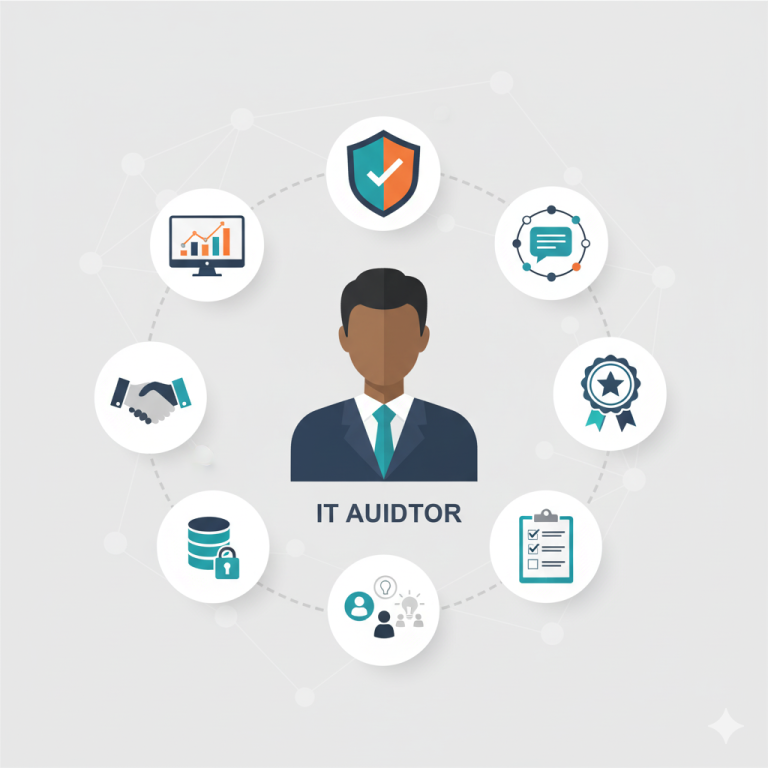
An IT auditor evaluates an organization’s technology infrastructure, policies, and security controls to ensure compliance with regulatory requirements and industry standards. Their primary responsibility involves conducting systematic reviews of information systems to identify vulnerabilities, assess risks, and recommend improvements that protect sensitive data and maintain operational integrity.
Primary Job Functions
IT auditors spend their days analyzing complex technology environments across multiple domains. They review access controls to ensure only authorized personnel can access critical systems. Database security assessments form a significant portion of their work, examining how organizations store, process, and protect sensitive information. Network security evaluations help identify potential entry points for cyber threats.
Documentation represents a crucial aspect of daily responsibilities. IT auditors create detailed reports that outline findings, risk assessments, and recommended remediation steps. These reports serve as roadmaps for organizations to improve their security posture and maintain compliance with regulations like SOX, HIPAA, and GDPR.
Work Environment and Project Types
Most IT auditors work in professional office settings with expanded remote work opportunities. The role involves collaboration with IT teams, business stakeholders, and external auditors. Work-life balance tends to be favorable compared to traditional financial auditing, with typical workweeks ranging from 40-45 hours.
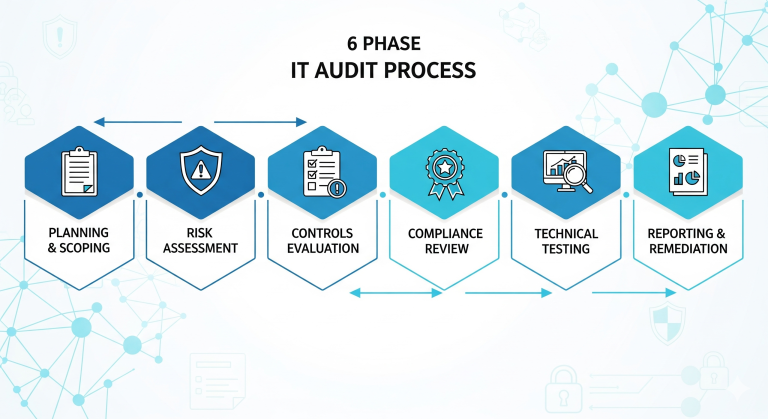
IT auditors engage in compliance audits, risk assessments, and control testing throughout annual audit cycles. Projects range from planning phases and fieldwork to reporting and follow-up activities that ensure recommended improvements are implemented effectively.
Essential Skills & Competencies for IT Auditor Success
Success in IT auditing requires a balanced combination of technical expertise, analytical thinking, and communication skills. The rapidly evolving technology landscape demands professionals who can adapt quickly while maintaining rigorous attention to detail.
Technical Skills Breakdown
Cybersecurity fundamentals form the foundation of IT audit competency. Understanding firewalls, intrusion detection systems, and vulnerability management enables auditors to evaluate security controls effectively. Knowledge of encryption standards, access management protocols, and incident response procedures helps assess organizational readiness for cyber threats.
Systems analysis capabilities allow auditors to understand complex technology architectures. Database management knowledge helps evaluate data integrity and security controls. Network infrastructure understanding enables assessment of communication security and access pathways. Cloud computing familiarity becomes increasingly important as organizations migrate to hybrid environments.
Risk assessment methodologies guide systematic evaluation of technology environments. Familiarity with frameworks like NIST, COBIT, and ISO 27001 provides structured approaches to control evaluation.
Analytical and Communication Skills
IT auditors must process large volumes of technical information to identify patterns and anomalies. Strong problem-solving skills help them trace security incidents to root causes. Data analysis skills using SQL, Python, or specialized audit software help auditors extract meaningful insights from technical data sources.
Technical findings must be translated into business language for various stakeholder audiences. IT auditors regularly present to executive leadership, explaining complex security risks in terms of business impact. Written communication skills are essential for creating clear, actionable audit reports.
Education & Certification Requirements for IT Auditors
The educational pathway to IT auditing offers flexibility for professionals from various backgrounds. While specific degree requirements vary by employer, certain educational foundations and professional certifications significantly enhance career prospects.
Educational Requirements
Most IT auditor positions require a bachelor’s degree in a relevant field. Computer science degrees provide strong technical foundations in programming, systems architecture, and cybersecurity principles. Information technology programs focus on practical applications and business technology integration. Accounting or finance degrees offer valuable understanding of internal controls and regulatory compliance frameworks.
Business administration programs with technology concentrations help develop the business acumen necessary for risk assessment and stakeholder communication. Professionals transitioning from other fields can enter IT auditing through bootcamp programs, graduate certificates, or relevant professional experience.
Essential Certifications
Certified Information Systems Auditor (CISA) represents the gold standard for IT audit professionals. Offered by ISACA, this certification requires five years of professional experience and demonstrates expertise in auditing, control, and security. CISA holders typically earn 15-25% higher salaries compared to non-certified professionals.
Certified Internal Auditor (CIA) provides broad internal audit knowledge applicable to IT environments. The Institute of Internal Auditors offers this globally recognized certification, which requires two years of internal audit experience.
Certified Information Systems Security Professional (CISSP) focuses on cybersecurity expertise valuable for IT auditors specializing in security assessments. Certified Information Security Manager (CISM) targets management-level security professionals and helps IT auditors advance to leadership roles.
CISA certification typically requires 6-12 months of study preparation with costs ranging from $2,000-$5,000 including exam fees and study materials. Professional certifications require ongoing maintenance through continuing professional education credits to ensure professionals stay current with evolving technology and regulatory requirements.
IT Auditor Salary Expectations & Compensation Breakdown (2025)
Compensation for IT auditors varies significantly based on experience level, geographic location, industry sector, and professional certifications. Understanding current market rates helps professionals set realistic salary expectations and negotiate competitive packages.
Salary Ranges by Experience Level
Entry-level IT auditors with less than two years of experience typically earn between $64,000-$85,000 annually. Mid-level professionals with 3-7 years of experience earn $85,000-$125,000 annually. Professional certifications like CISA or CIA can increase compensation by $10,000-$15,000 at this level.
Senior IT auditors with 7-12 years of experience command salaries of $125,000-$160,000. Management positions including audit managers and directors earn $160,000-$220,000 or more, combining technical expertise with business leadership responsibilities.
Geographic and Industry Variations
San Francisco and Silicon Valley offer the highest IT auditor salaries, with senior professionals earning $180,000-$250,000 annually. New York City and Washington DC provide salaries 20-25% above national averages. Remote work opportunities have expanded significantly, allowing professionals to access higher salaries while living in lower-cost areas.
Financial services typically offers the highest compensation due to intensive regulatory requirements. Healthcare organizations provide competitive salaries driven by HIPAA compliance requirements. Technology companies offer competitive base salaries often supplemented by equity compensation.
Total Compensation Packages
Beyond base salaries, IT auditors typically receive comprehensive benefits packages including health insurance, retirement benefits with 401(k) matching, and professional development budgets of $3,000-$8,000 annually. Bonus structures typically range from 10-25% of base salary for meeting performance objectives.
Typical IT Auditor Job Requirements & Qualifications
Understanding employer expectations helps professionals prepare effectively for IT auditor positions. Job requirements vary by experience level and organization size, but certain qualifications appear consistently across the field.
Experience Requirements by Level
Entry-level positions typically require 0-2 years of relevant experience, often accepting internships, academic projects, or related IT experience. Associate-level roles require 2-5 years of audit, IT, or compliance experience. Senior positions demand 5-10 years of progressive audit experience with demonstrated leadership capabilities.
Public accounting experience provides excellent preparation for IT auditing roles. IT operations experience including systems administration or cybersecurity provides technical credibility. Compliance roles in regulated industries offer relevant experience with risk assessment and control testing.
Industry-Specific Requirements
SOX compliance experience becomes essential for auditors working with public companies. HIPAA knowledge creates opportunities in healthcare organizations. PCI-DSS expertise provides opportunities with retail and e-commerce organizations. Cloud security knowledge becomes increasingly valuable as organizations migrate to hybrid environments.
Technical tool proficiencies including audit management software like ACL and IDEA, security tools, database query languages like SQL, and scripting capabilities help automate audit tasks and demonstrate technical competency.
How to Prepare for IT Auditor Interviews & Applications
Successful preparation for IT auditor positions requires strategic planning across multiple dimensions. From resume optimization to technical interview preparation, thorough preparation significantly improves success rates.
Resume and Portfolio Development
Quantify audit impact wherever possible in your resume using specific numbers and results. Highlight relevant certifications prominently and use industry-specific keywords that align with job descriptions. Create a professional portfolio showcasing audit reports, risk assessments, and process improvement recommendations while maintaining confidentiality.
Interview Preparation
Risk assessment questions test your ability to identify and evaluate potential threats. Control testing scenarios evaluate your understanding of audit methodologies. Regulatory compliance questions assess your knowledge of relevant frameworks. Technical troubleshooting scenarios test your practical IT knowledge.
Prepare STAR method examples that demonstrate key competencies including analytical thinking, communication skills, and problem-solving abilities. Practice explaining technical concepts to non-technical audiences, as this demonstrates communication skills valued by employers.
Salary Negotiation
Research market rates thoroughly using multiple sources and consider geographic location, industry sector, and organization size. Prepare to discuss total compensation beyond base salary, including benefits, professional development budgets, and flexible work arrangements.
Career Progression & Advancement Opportunities for IT Auditors
The IT audit profession offers multiple pathways for career advancement, each requiring different skill sets and professional development strategies.
Career Timeline and Advancement
Years 1-3: Foundation Building focuses on developing core audit skills and technical competencies. Years 4-7: Specialization Development involves deepening expertise while taking on increased responsibilities. Years 8-12: Leadership Emergence sees professionals transitioning to management roles. Years 12+: Executive Leadership positions include audit directors and C-suite roles.
Specialization Areas
Cloud security auditing represents a rapidly growing specialization as organizations migrate to cloud environments. Regulatory compliance specialization focuses on specific industries or frameworks like SOX, HIPAA, or PCI-DSS. Risk management roles combine audit expertise with strategic business planning. Cybersecurity leadership positions leverage audit experience to build comprehensive security programs.
Alternative Career Paths
Independent consulting becomes viable for experienced professionals with strong client networks. Technology companies value IT audit experience for security architecture and compliance management roles. Government positions provide job security and comprehensive benefits. Academic institutions offer faculty or administrative opportunities.
Work Environment & Job Market Outlook for IT Auditors
The professional landscape for IT auditors continues evolving rapidly, driven by technological advancement, regulatory changes, and shifting organizational priorities.
Job Market Demand and Growth
The Bureau of Labor Statistics projects 33% employment growth for IT auditors from 2023 to 2033, representing one of the fastest-growing occupational categories. Demand drivers include increasing cybersecurity threats, expanding regulatory requirements, and digital transformation initiatives. Skills gaps create opportunities for qualified professionals, leading to competitive compensation packages.
Remote Work and Industry Demand
Remote work adoption has become permanent, with virtual audit techniques enabling effective remote audit execution. Geographic arbitrage opportunities allow professionals to access high-paying positions while living in lower-cost areas.
Financial services shows the strongest demand due to regulatory oversight. Healthcare organizations face increasing cybersecurity threats requiring specialized expertise. Technology companies increasingly recognize the value of internal IT audit functions. Government organizations require IT auditors for data protection and federal security compliance.
Emerging Technologies and Future Outlook
Artificial intelligence and machine learning create new audit opportunities while changing traditional approaches. Cloud computing evolution continues creating specialized opportunities. Internet of Things expansion introduces new security risks requiring specialized audit approaches.
Essential business function status provides significant job security, as organizations cannot reduce cybersecurity investments during economic downturns. Regulatory requirements mandate ongoing audit activities regardless of economic conditions. Skills transferability across industries provides career resilience.
Conclusion
The IT audit profession offers exceptional career opportunities for professionals who combine technical expertise with analytical thinking and communication skills. With 33% projected growth through 2033 and average salaries ranging from $77,000 to $174,000, the field provides both financial rewards and intellectual challenges.
Success requires continuous learning and professional development. Professional certifications like CISA and CIA provide competitive advantages while demonstrating commitment to excellence. Career advancement paths offer flexibility for different interests, whether pursuing management leadership, technical specialization, or independent consulting.
The future outlook remains exceptionally positive, with increasing cybersecurity threats, expanding regulatory requirements, and digital transformation initiatives ensuring sustained demand for qualified professionals. Remote work opportunities and geographic flexibility further enhance the appeal of this dynamic profession.
Stay updated on the latest IT audit trends and career opportunities by subscribing to our professional newsletter. Join thousands of IT audit professionals who rely on our insights for career advancement and industry knowledge.